


Khatam Al-Quran in Singapore: A Simple Guide to the Berkhatam Ceremony

Updated: Jun 5

There is a quiet kind of pride in watching a child finish reading the Quran for the first time. Years of mengaji, evening after evening — all leading to one proud moment. Many Malay families in Singapore mark it with a gathering called a khatam Al-Quran.
Whether you are planning one for your child, or a khatam is part of an upcoming wedding in your family, this guide covers what it means, what happens, and how to organise it well — in plain language.
One thing stays clear throughout: what is religious teaching, and what is cultural custom. Knowing the difference helps you plan with confidence.
Key Takeaway: Khatam Al-Quran means completing a full recitation of the Quran. The completion itself and making du'a afterwards is religious and praiseworthy. The celebration around it — the kenduri, the pulut kuning, the marhaban — is a Malay cultural custom that varies from family to family.
What Is Khatam Al-Quran?
Khatam Al-Quran is the completion of a full Quran recitation, from Surah Al-Fatihah through to Surah An-Nas. The word khatam itself means to seal or to finish — so a khatam marks the moment someone has read the entire Book of Allah from start to end.
Reciting the Quran carries great reward in Islam, and so does completing it. The Companion Anas ibn Malik would gather his family and supplicate together whenever he finished the whole Quran — a clear precedent for coming together in du'a at this moment. You can read more about that practice at IslamQA.
The key distinction to hold onto: the completion and the du'a are religious. The celebration around it is cultural. Both can be meaningful. But they sit in different categories — and that matters when family members have different expectations about what should or should not be done.
What Is the Malay Berkhatam Tradition?
Berkhatam is the Malay word for marking this completion. In the wider Nusantara tradition — across Singapore, Malaysia, and Indonesia — a khatam is a deeply cherished milestone. After a child finishes their mengaji lessons, the family holds a thanksgiving kenduri, invites relatives and neighbours, and honours the Quran teacher who guided the child to this point.
In Singapore, the learning pathway is well established. The Quran is taught through part-time mosque classes such as MUIS aLIVE and in full-time madrasahs. Many learning centres award a khatam certificate once a student completes their recitation in front of their teachers.
Singapore mosques also hold their own Majlis Khatam Al-Quran — especially during Ramadan — so the tradition of marking a completed Quran is alive and active at both the home and community level.
Practices described here draw from the wider Malay tradition across Singapore, Malaysia and Indonesia. They vary by family and region. For religious rulings specific to your situation, always consult a qualified asatizah.
Is a Khatam Al-Quran Ceremony Compulsory in Islam?
No. A khatam ceremony is not a religious obligation in Islam.
Completing the Quran and making du'a afterwards is virtuous and has clear precedent. But holding a celebration for it is a permissible cultural custom — not a required ritual. Scholars generally view celebrating the completion of the Quran as something allowed, provided it stays within good intention and avoids extravagance or showing off. A helpful discussion of this is available at IslamQA. For guidance specific to Singapore, Muslim.sg — the learning platform by Singapore's Islamic scholars — covers Quran-related etiquette and practices in full.
In practice, this gives you complete freedom. A simple gathering with close family and a heartfelt du'a is whole and beautiful on its own. A larger kenduri with relatives, neighbours, and a feast is equally fine if that is your family's way. The custom should serve the gratitude — not overshadow it.
Khatam Al-Quran and Malay Weddings in Singapore
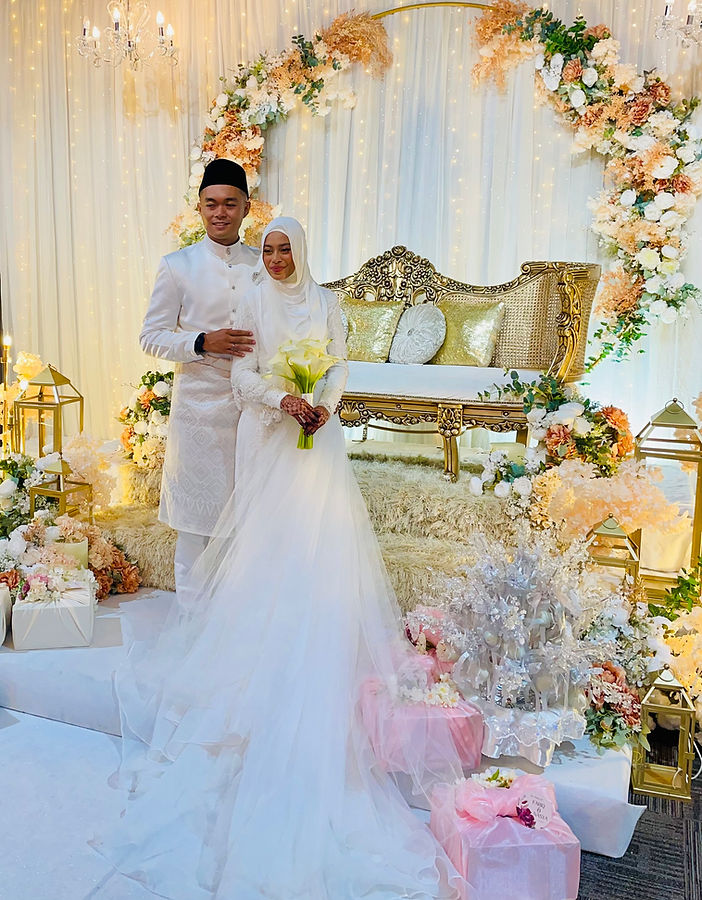
In some Malay families, a khatam Al-Quran is held for the bride shortly before her akad nikah. She completes or recites the Quran, the family gathers, and a du'a is made before the solemnisation. It is a touching way to begin a marriage on a spiritual note.
This wedding khatam is a custom, not a requirement, and it is strongly associated with certain regional traditions. Some families do it for the bride, some for both bride and groom, and many do not do it at all. None of those choices is more or less valid.
It is worth not confusing this with the Quran recitation that happens during the akad nikah itself — the recitation by the kadi or imam is part of the legal solemnisation, which is a different matter entirely. If you want the full picture of that ceremony, our guide to the akad nikah in Singapore walks through every step.
If a wedding is what brought you here, you may also find it useful to read about Muslim marriage registration through ROMM and how mas kahwin works in Singapore, since both come up during planning.
What Happens at a Khatam Al-Quran Majlis?
A khatam ceremony centres on three things: recitation, du'a, and a thanksgiving gathering. The reciter reads selected surahs, guests listen, a doa khatam is made together, and everyone shares a meal. The exact order shifts from family to family, but the heart stays the same.
The Recitation
The recitation typically opens with Al-Fatihah and moves through the closing surahs of the Quran — commonly from Surah Ad-Dhuha through to Surah An-Nas. Many gatherings focus on this final juz, since it represents the conclusion of the whole recitation journey.
Some families call out takbir between the closing surahs. Scholars hold a genuine difference of opinion on this — some consider it a sunnah practice, others view the supporting report as weak. If one family does it and another does not, both are fine.
The Doa Khatam Al-Quran
After the recitation comes the doa khatam Al-Quran — the supplication on completing the Quran. There is no single fixed prophetic du'a for this occasion, so families use various texts.
A widely recited Malay supplication begins "Allahummarhamna bil-Quran" — asking Allah to make the Quran a light, a guide, and a mercy. Longer classical versions also exist. The key is sincerity, not a fixed script. You may also make du'a freely for the child, the family, and the ummah.
Marhaban, Berzanji, and the Kenduri
Many families add marhaban or berzanji — melodious recitations in praise of the Prophet Muhammad ﷺ. A group, often the women of the family or a community ensemble, performs these as part of the celebration.
Then comes the food. Pulut kuning (yellow glutinous rice), often served with bunga telur, is the customary dish — a symbol of gratitude. Traditionally, the teacher hands pulut kuning to the student who has completed the Quran. A wider halal kenduri spread usually follows for all guests.
Who Is Involved in a Khatam Ceremony?
The guru mengaji — the Quran teacher — sits at the heart of a khatam. The student recites in front of the teacher, who listens, corrects, and verifies the completion. The family honours this teacher for years of patient guidance. In some traditions, gifts such as a prayer mat or telekong are presented in thanks.
Beyond the teacher, a khatam gathers the people who matter most: parents, grandparents, siblings, extended family, neighbours, and close friends. For many parents it is a deeply emotional moment — a sign they have fulfilled their duty to give their child a religious foundation.
This is why the custom endures. It is gratitude made visible. It strengthens silaturahim between families and shows a child that their effort with the Quran is something the whole community celebrates.
What to Wear and What to Prepare for a Khatam Majlis
Dress for a khatam is modest and traditional. Boys and men typically wear baju Melayu with a songkok, sometimes a jubah. Girls and women wear baju kurung with a head covering. For a wedding khatam, the bride often wears white or a soft, graceful colour.
For preparation, keep it practical. Here is a checklist to work from:
A Quran and a rehal (Quran stand) for the reciter
Comfortable seating arranged so guests can hear and see clearly
The guru mengaji or an ustaz to lead and verify the recitation
Pulut kuning with bunga telur, plus a halal kenduri spread
A sound system if the gathering is large or includes marhaban
A clean, quiet prayer space with ablution facilities for guests
Keep it as simple or as full as suits your family. A small living-room gathering and a large hall majlis can both be done beautifully, with the same sincerity at the centre.
Khatam, Tasmik, and Aqiqah: What Is the Difference?
These three terms get mixed up often. Here is the simple version:
Term | What It Is |
Khatam | Completing the full Quran recitation — from Al-Fatihah to An-Nas — and the celebration of that milestone |
Tasmik | A method where a student recites to a teacher who listens, corrects, and verifies along the way — the regular checkpoints before the finish line |
Aqiqah | The sacrifice made in gratitude for a newborn — a separate act of worship, often held alongside cukur rambut (the shaving of a baby's hair) |
Aqiqah is entirely separate from a khatam — it relates to the birth of a child, not a Quran milestone. For a full explanation, read our guide to aqiqah and cukur rambut in Singapore. The National Library Board also has a useful overview of Malay-Muslim birth rituals.
How to Plan a Khatam Al-Quran Ceremony in Singapore: Step by Step
Set your intention and decide the scale — from an intimate family du'a to a full kenduri
Pick a date and confirm the guru mengaji or ustaz who will lead the recitation
Choose your venue and check that it suits your expected guest count and includes a prayer area
Arrange halal catering, including the customary pulut kuning
Plan the programme: recitation → doa khatam → marhaban → kenduri
Welcome guests, hold the majlis, and share the meal together
Honour the teacher and thank everyone who supported the child's journey
Give yourself enough lead time — especially if you are inviting a wide circle. Booking early means the venue, the teacher, and the caterer all align smoothly rather than becoming a last-minute scramble.
Best Halal Venues for Khatam Al-Quran Ceremony in Singapore
For a small khatam, your home is often the right choice. For a larger gathering with extended family and neighbours, a dedicated venue makes everything easier. The features that matter most are flexible space, halal catering, a proper prayer area, and an atmosphere that fits the occasion.
📍 Organising a khatam majlis in Singapore?De Hall at Tai Seng is a fully halal, alcohol-free venue with flexible ballrooms for 100–500 guests, a dedicated prayer room with wudhu facilities, and certified halal catering — built for Malay and Muslim family gatherings.Check availability at De Hall →
De Hall is located at 3 Irving Road, #02-08, Tai Seng Centre, Singapore 369522 — a 2-minute walk from Tai Seng MRT (Circle Line, Exit A). It is a purpose-built, fully halal, alcohol-free venue covering over 14,000 square feet across two flexible ballrooms, accommodating gatherings from 100 to 500 guests.
For a khatam majlis specifically, a few things stand out:
Dedicated prayer area with ablution (wudhu) facilities — built into the venue, not improvised. Guests, ustaz, and the imam can pray Zohor or Asar without stepping out
Fully alcohol-free — no bar, no alcohol on event days, comfortable for every generation from grandparents to young children
PA system and acoustics suited to Quran recitation, doa, and marhaban — the room carries the sound the way it should
Halal catering served by certified partners, with menus built around local Malay favourites — nasi briyani, ayam masak merah, rendang, kuih Melayu, and live teh tarik stations
Bridal room available if the khatam is part of a wedding, giving the bride a private space to prepare
The two ballrooms can be used separately for smaller groups or combined for larger ones. You can preview the full space in our Tai Seng ballroom guide.
Not sure how much room your guest list needs? Our venue capacity guide shows how seating layout changes the numbers. For what genuinely makes a venue halal beyond just the food, read our guide on what makes a venue halal in Singapore. And if catering is your main question, the halal wedding catering guide covers it in detail.
Frequently Asked Questions About Khatam Al-Quran in Singapore
What does khatam Al-Quran mean?Khatam means to seal or complete. Khatam Al-Quran is finishing a full recitation of the Quran, from Surah Al-Fatihah to Surah An-Nas. The ceremony that marks this completion is a Malay cultural custom, not a separate religious ritual.
Is a khatam ceremony compulsory in Islam?
No. Completing the Quran and making du'a afterwards is virtuous and has clear precedent. Holding a celebration for it is a permissible cultural custom, not a religious obligation. Families are free to mark it simply or grandly.
What surahs are read at a khatam Al-Quran?
A khatam commonly opens with Al-Fatihah and recites the closing surahs from Surah Ad-Dhuha through to Surah An-Nas, covering the final juz. The exact selection can vary by family and teacher.
What is the doa after khatam Quran?
There is no single fixed prophetic du'a for finishing the Quran. A widely used Malay supplication begins "Allahummarhamna bil-Quran." You may also supplicate freely for the child, yourself, and the family.
Why do some Malay families hold a khatam before a wedding?
In some Malay regional traditions, the bride completes or recites the Quran shortly before the akad nikah. This is a family custom — not a marriage requirement — and varies by tradition and region.
What food is served at a khatam majlis?
Pulut kuning (yellow glutinous rice) with bunga telur is the customary dish, symbolising gratitude. A halal kenduri spread for all guests usually follows.
Where can I hold a large khatam ceremony in Singapore?
For a larger khatam majlis in Singapore, look for a venue with flexible space, halal catering, a dedicated prayer area, and an alcohol-free policy. De Hall at Tai Seng offers all of these, with ballrooms for 100 to 500 guests, a prayer room with wudhu facilities, and halal catering built around Malay family gatherings. Call +65 9855 3027 / +65 8891 6516 or visit dehallsg.com/book-online.
Related Guides at De Hall
Planning a khatam Al-Quran for your family?
De Hall at Tai Seng is a halal, alcohol-free venue with flexible ballrooms, a dedicated prayer area with wudhu facilities, and certified halal catering — built for Malay and Muslim family gatherings of every size.📍 3 Irving Road, #02-08, Tai Seng Centre, Singapore 369522🚇 2 minutes walk from Tai Seng MRT (Circle Line, Exit A)📞 +65 9855 3027 / +65 8891 6516Preview the Tai Seng ballroom or explore our halal catering options before you visit.




Comments