


Baju Nikah & Baju Sanding Singapore: Cost & Style Guide


Baju nikah and baju sanding decide how every wedding photo looks for life. Most Malay couples in Singapore now prepare two to five outfits, according to The Iris (2025). Each one carries a different role, cost, and cultural weight. Therefore plan the wardrobe early, not in the final month. This guide covers rental and custom costs, songket styles, and how many outfits you need. It also shows how to match your attire to your pelamin and venue lighting. De Hall hosts both the akad nikah and the bersanding in Tai Seng, so the styling reflects a real ballroom.
Key Takeaway: Budget couple songket sets rent from about S$350–S$400 in Singapore, while premium multi-outfit packages reach S$1,500–S$3,500 per person. Plan two to five outfits, match the songket colour to your pelamin, and book fittings around eight months before the wedding.
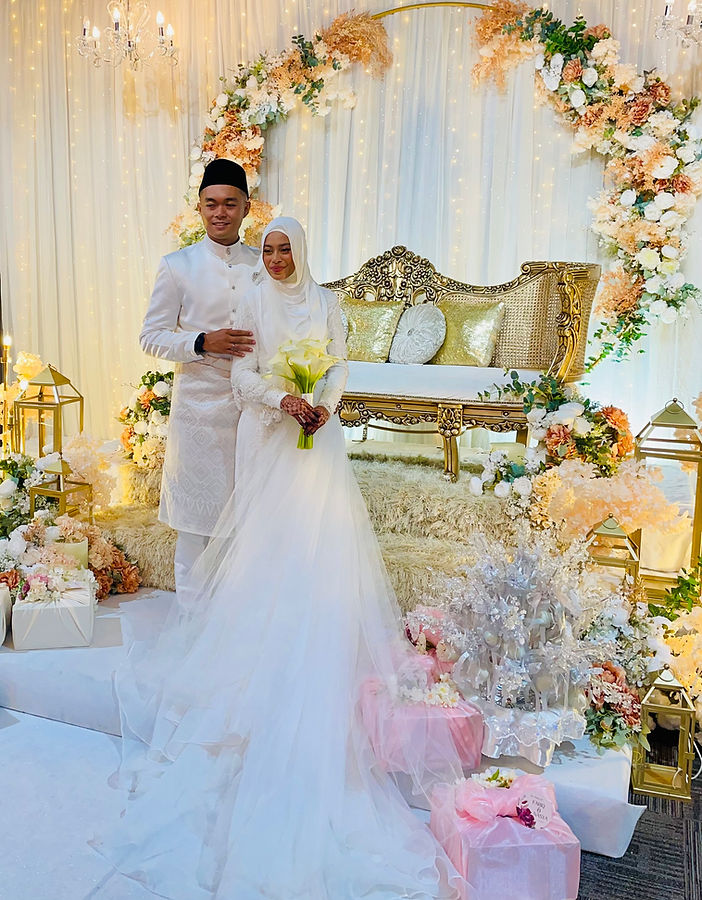
Baju nikah is the modest outfit a Malay couple wears for the akad nikah (Islamic solemnisation) in Singapore, usually a baju kurung moden in off-white or pearl. — De Hall Wedding Guide, 2026
Baju sanding is the grand Malay wedding reception outfit worn during the bersanding ceremony, featuring handwoven songket with gold or silver threads, plus accessories such as samping, tanjak, keris, and rantai dokoh. — De Hall Wedding Guide, 2026
What are baju nikah and baju sanding?
Baju nikah and baju sanding are two outfits for two ceremonies. The baju nikah is the modest solemnisation outfit. The baju sanding is the grand reception outfit, usually songket. Couples wear them on the same day or across two days, depending on the wedding format. The two looks differ in fabric, colour, and formality.
Baju nikah: the modest solemnisation outfit
The baju nikah is the outfit worn for the akad nikah, the Islamic solemnisation. It leans modest, refined, and often off-white or pearl. Brides commonly choose a baju kurung moden or a duchess kurung with selempang sulam. Grooms wear a baju Melayu moden in a matching tone. The look stays understated, because the akad nikah is solemn rather than celebratory. For the ceremony side, see the akad nikah setup at De Hall. Therefore keep this outfit clean and photogenic against a simple backdrop.
Baju sanding: the songket reception outfit
The baju sanding is the showpiece outfit for the bersanding reception. This is where couples wear full songket, the handwoven heritage fabric. Brides often choose a songket kebaya or a two-piece dress with a detachable trail. Grooms pair a baju Melayu or kot raihan with a samping and a tanjak. According to the National Heritage Board, the groom traditionally wears baju kurung with a kain songket and a tajak headdress, while the couple sits on the pelamin. Read more on the bersanding ceremony. As a result, the sanding outfit carries the most visual weight of the day.
Baju nikah vs baju sanding: side-by-side
This table compares the two outfits at a glance. Use it to brief your tailor or rental boutique.
Aspect | Baju nikah | Baju sanding |
Ceremony | Akad nikah (solemnisation) | Bersanding (reception) |
Mood | Modest, refined | Grand, ornate |
Bride fabric | Duchess, satin, baju kurung moden | Handwoven songket |
Typical colour | Off-white, pearl, soft tones | Gold, maroon, emerald |
Groom | Baju Melayu moden | Baju Melayu / kot raihan + samping + tanjak |
Accessories | Minimal | Keris, rantai dokoh, veil, sanggul |
How much do baju nikah and baju sanding cost in Singapore?
Baju nikah and baju sanding cost from about S$350 for a budget rental to S$3,500 per person for premium packages. The price depends on fabric, designer, and outfit count. The ranges below come from named Singapore sources in 2025 and 2026. Confirm current rates directly, because tiers and alterations move the figure.
Rental cost ranges by tier (2025–2026)
Rental dominates the Singapore market, because songket is expensive to buy outright. The table compares published ranges across tiers. Each row links to its source for verification.
Tier | What it covers | Range (SGD) | Source (verify current) |
Budget couple set | Bride + groom songket, samping, tanjak, 1 fitting, ~5 days | ~S$350–S$400 (+S$200 deposit) | Carousell SG, 2026 |
Mid full set (pair) | Outfits plus accessories and headgear | S$600–S$1,500+ | House of Ivory, 2026 |
Premium / multi-outfit | Two complete sets, designer, alterations | S$1,500–S$3,500 per person | The Iris, 2025 |
Bespoke (custom, yours to keep) | Tailored nikah set; or full songket sanding set | S$1,000 nett (nikah); S$1,500 nett (sanding) | SUFYAA, 2026 |
Note the units: budget and mid tiers price a full pair, while premium packages quote per person. Figures are third-party published rates and change over time.
Rent or custom-make: which should you choose?
Rent your attire for lower cost and proven fit; custom-make it when fit or exclusivity matters most. A budget couple songket set rents from S$350 to S$400 in 2026, according to Carousell Singapore listings. That covers a full bride-and-groom look for under the price of one reception table. In contrast, bespoke tailoring starts from S$1,000 nett for a nikah set, based on SUFYAA's published pricing, and you keep the outfit. Rental suits most couples on a timeline. Custom suits unusual sizing, specific motifs, or a keepsake. Therefore decide your fit priority and budget before browsing collections.
How many outfits do you actually need?
Most Singapore Malay couples prepare two to five outfits, not one. The number scales with budget, format, and how many ceremonies you hold. More outfits mean more rental fees, fittings, and logistics on the day. Plan the count first, then set a budget per outfit.
The two-to-five outfit reality
Couples commonly prepare two to five outfits across the wedding, according to The Iris (2025). A typical sequence runs a modest nikah look, then a traditional songket for the sanding, and sometimes a Western-style gown. Each extra outfit adds a rental fee and a costume change on the day. As a result, three outfits already demand tight timing between ceremonies. Notably, some couples now pick a single Western gown to cut cost, as The Pride (2025) reported. Decide your count against both budget and the day-of schedule.
Matching outfits to each event
Match each outfit to the tone of its ceremony, not to one theme. The akad nikah calls for a modest baju nikah in soft tones. The bersanding calls for a bolder songket baju sanding in gold, maroon, or emerald. If you change outfits mid-reception, build a five-minute buffer per change. For the full sequence, follow the Malay wedding planning timeline. Therefore confirm your outfit order with your mak andam Singapore before the day.
Where to rent baju nikah and baju sanding in Singapore
Singapore couples rent baju nikah and baju sanding from specialist Malay bridal boutiques and peer listings. De Hall is a venue, not an attire seller, so use this list as a starting reference. Verify pricing, fit, and availability directly with each boutique. The options below appeared in public 2025–2026 listings.
PP Signature — baju nikah and baju sanding rental collection, songket and non-songket, petite to plus sizes.
House of Ivory — bridal rental boutique with a published Singapore cost guide.
SUFYAA — bespoke Malay bridal tailoring for nikah and sanding sets, outfit yours to keep.
Carousell Singapore — peer-to-peer rental listings for budget couple sets.
For total budgeting across attire, venue, and catering, see the Malay wedding cost in Singapore guide. Pair attire research with your Malay bridal package planning, so nothing clashes later.
Songket explained: why it costs more
Songket costs more, because skilled weavers hand-weave it with metallic gold or silver threads. The fabric carries royal heritage and heavy craftsmanship. That craft, not branding, drives the premium. Understanding it helps you judge whether a quote is fair.
What makes songket premium
Songket is a luxurious handwoven fabric interlaced with gold or silver metallic threads, according to UNESCO. Weavers historically reserved it for royalty and nobility during grand ceremonies. The name derives from the Malay word "sungkit", meaning to leverage thread. Real handwoven songket therefore takes far longer to produce than printed imitations. This explains the price gap between a genuine songket set and a budget look. Ask the boutique whether the fabric is handwoven or printed before you commit.
Accessories that complete the look
Accessories turn a baju sanding from plain to ceremonial, and rentals often bundle them. A groom's set commonly includes a samping, a tanjak or songkok, a keris, and a rantai dokoh. A bride's set adds a veil, a brooch, and a sanggul. Carousell Singapore listings show couple rentals including samping, tanjak, keris, and dokoh in the base price, with extra accessories from S$40. Therefore confirm exactly which accessories the package covers. Missing pieces can quietly add to your bill.
Coordinating your attire with the venue and pelamin
Your attire never appears alone; it sits against your pelamin, your decor, and your venue lighting. Coordinating these early prevents clashing colours in every photo. The venue's light also decides how the songket's metallic threads read on camera. Plan attire and venue together, not separately.
Match attire colour to your pelamin
Match your songket palette to your pelamin and ballroom tones before you confirm either. A maroon-and-gold baju sanding reads beautifully against a cream or blush pelamin. A clashing pelamin, however, fights the outfit in every frame. Decide the attire colour and the songket colour for your pelamin as one decision. Your mak andam can advise on tones that flatter both. Therefore lock the colour story before the final fitting.
Why venue light makes or breaks the outfit
Venue lighting decides whether your songket shimmers or falls flat in photographs. Metallic threads catch light, so soft, even lighting flatters them most. A dim or harsh hall hides the detail you paid for. De Hall runs two air-conditioned ballrooms in Tai Seng with natural daylight, which suits metallic fabrics on camera. Natural daylight also keeps skin tones true without heavy editing. Consequently, the same songket photographs richer in a well-lit ballroom than in a dim void deck. Visit the space and check the light before you finalise your palette.
When to book and what a rental should include
Book your attire around eight months before the wedding, alongside your pelamin. Popular designer pieces and peak dates get reserved early. Leave time for at least two fittings and final alterations. Confirm package inclusions in writing before you pay.
Fitting timeline (step by step)
Follow these four steps so your pre-wedding attire fits on the day.
Book attire about eight months out, together with your pelamin.
Attend a first fitting soon after booking.
Attend a final fitting four to six weeks before the wedding.
Collect and inspect every piece in person during the final week.
Brides whose weight changes should add a fitting closer to the date. Therefore keep the final fitting late enough to catch any change.
What a rental package should include (checklist)
Confirm these inclusions before signing any rental agreement. A complete couple package should cover both outfits, core accessories, one or two fittings, and standard alterations. Check the rental window, since many run about five days. Confirm the refundable deposit, which Carousell listings commonly set at S$200. Ask which accessories cost extra, and whether a veil, keris, and tanjak are included. Finally, confirm the return condition and any cleaning or damage fees. Get every line in writing to avoid surprises.
FAQ: Baju nikah & baju sanding in Singapore
How much does baju nikah and baju sanding rental cost in Singapore?
Baju nikah and baju sanding rental ranges widely by tier. Budget couple songket sets start from about S$350 to S$400 plus a S$200 deposit, based on Carousell Singapore listings. Mid full sets run S$600 to S$1,500, according to House of Ivory. Premium multi-outfit packages reach S$1,500 to S$3,500 per person, per The Iris.
How many outfits do I need for a Malay wedding?
Most Singapore Malay couples prepare two to five outfits, according to The Iris. A common sequence is a modest baju nikah for the akad, a songket baju sanding for the reception, and sometimes a Western gown. Each extra outfit adds a rental fee and a costume change. Choose the count against your budget and schedule.
Should I rent or custom-make my wedding attire?
Rent your attire for lower cost and proven fit; custom-make it for unusual sizing or exclusivity. Budget couple rentals start from S$350 to S$400, while bespoke tailoring starts from S$1,000 nett for a nikah set, based on SUFYAA's published rate, and you keep the outfit. Rental suits most timelines. Custom suits specific motifs or a keepsake outfit.
Why is songket so expensive?
Songket is expensive, because weavers hand-weave it with gold or silver metallic threads. UNESCO describes it as a luxurious handwoven fabric historically reserved for royalty. Genuine handwoven songket takes far longer to produce than printed imitations. Always ask whether the fabric is handwoven or printed, because that difference explains most of the price gap.
What accessories come with a baju sanding rental?
A baju sanding rental usually bundles the core accessories. A groom's set commonly includes a samping, a tanjak or songkok, a keris, and a rantai dokoh. A bride's set adds a veil, a brooch, and a sanggul. Carousell listings include these in the base price, with extra accessories from S$40. Confirm the exact list before booking.
Plan your Malay wedding at De Hall
Your attire deserves a venue that makes it photograph at its best. De Hall hosts both the akad nikah and the bersanding in an alcohol-free, air-conditioned ballroom in Tai Seng. Two flexible ballrooms with natural daylight flatter songket's metallic threads on camera. Next, bring your attire palette and pelamin idea to the team. Book a free, one-hour venue consultation at De Hall to plan your colour story, pelamin, and outfit-change timing in one place. You can also call 9855 3027 or email enquiry@dehallsg.com. For full budgeting, read the Malay wedding cost in Singapore guide.
Published by the De Hall Events Team, De Hall Pte Ltd (UEN 201931949G), Tai Seng, Singapore. Last updated June 2026. Malay wedding attire heritage referenced from the National Heritage Board (Roots.gov.sg) and UNESCO on songket. Cost figures are third-party published rates and change over time; verify before budgeting.




Comments