


Bersanding Ceremony Singapore: Meaning, Pelamin & Modern Setup 2026

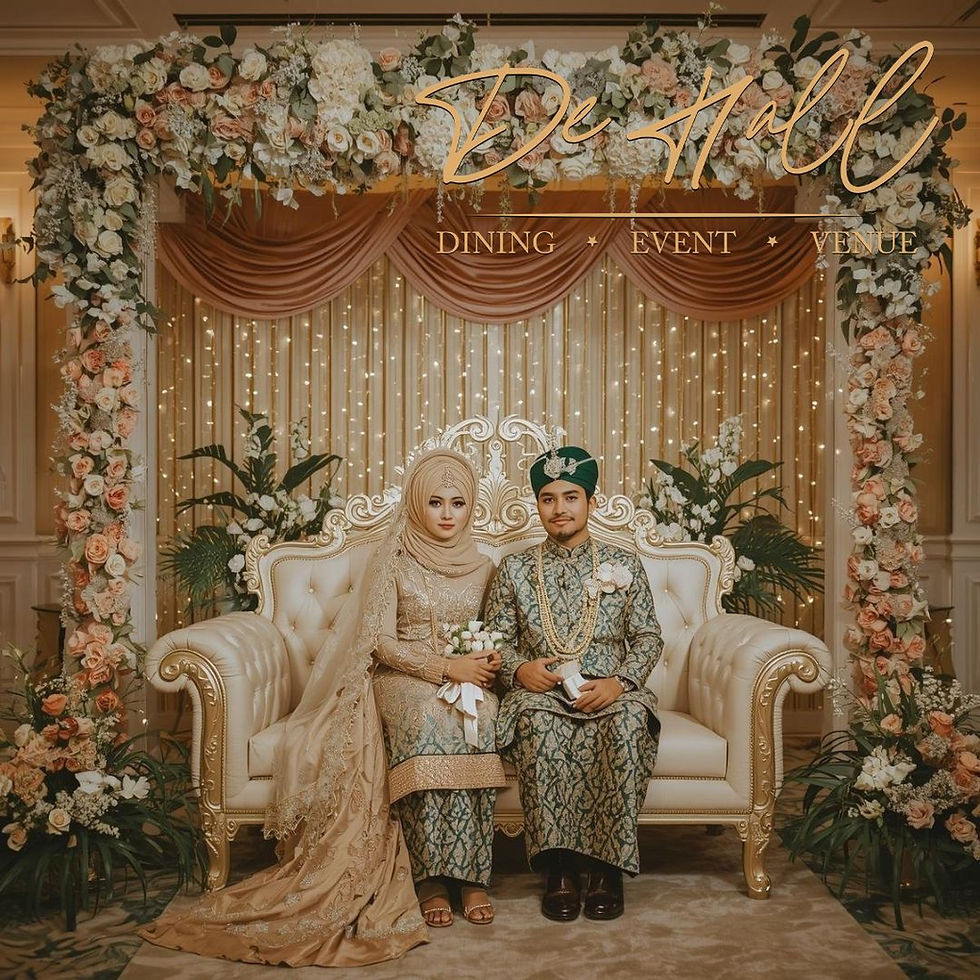
The bersanding ceremony is the centrepiece of every Malay wedding in Singapore. Guests travel from Malaysia and Indonesia for it. Families spend months coordinating the pelamin, the baju sanding, and the kenduri feast. Yet most available guides reduce this tradition to a single paragraph without cultural depth. This guide covers bersanding fully — its royal origins, its place in the wedding sequence, how the pelamin is designed and booked today, and the venue choices Singapore couples face in 2026. Every cultural claim draws from the National Library Board's heritage research and BiblioAsia — Singapore's primary Malay cultural archive. For Indian Muslim wedding traditions in Singapore, a separate guide covers parallel customs in detail.
Key Takeaway
Bersanding — the Malay sitting-in-state ceremony — is the highlight of a Singapore Malay-Muslim wedding, according to the National Library Board (Koh & Ho, 2020). The couple sits on the pelamin, a decorated dais symbolising two royal thrones, while guests bestow blessings with yellow rice and flower petals. Modern Singapore bersandings run within an 11am–5pm walimah feast. Most couples choose a dedicated halal venue — or, for heritage-minded families, an HDB void deck.
What Is the Bersanding Ceremony?
Bersanding is the sitting-in-state ceremony at the heart of a Malay-Muslim wedding. The bride and groom sit together on the pelamin — a decorated dais — while family and guests offer blessings. It is the most public moment of the entire wedding. Every guest schedules their arrival around it.
Bersanding Meaning — "Sitting-in-State" Defined
Bersanding translates as "sitting together" or "sitting side by side" in Malay. More formally, the full ceremony is called persandingan — the sitting-in-state of the bride and groom on the pelamin dais. The couple, dressed in traditional Malay attire, takes their place as raja sehari — king and queen for the day. Guests approach in sequence, sprinkle yellow rice and flower petals, and offer prayers over the couple.
According to the National Library Board's heritage research on Malay Muslim Marriages (Koh & Ho, NLB 2020), bersanding is the highlight of the Malay-Muslim wedding. This means every preceding ceremony — from akad nikah to the kompang procession — builds toward this single public moment. The bersanding is where the community formally witnesses and celebrates the marriage.
Unlike akad nikah (the religious solemnisation), bersanding is a cultural tradition rooted in Malay adat. Per BiblioAsia (NLB, 2021), akad nikah is the only ceremony with a direct Islamic obligation. Bersanding carries cultural weight — not religious requirement — which is why its format has changed significantly across generations. Some couples choose a solemnisation-only wedding without a full bersanding. However, for most Singapore Malay families, skipping bersanding remains uncommon.
The Origin: From Royal Throne to Singapore Kampung
The pelamin traces its origins directly to the concept of the royal Malay throne. Research published in the 8th International Conference on Science & Social Research (CSSR 2021, UiTM) documents that the pelamin design originated from Malay royal court tradition. This concept was adapted to represent raja sehari — the bridegroom as king — in wedding ceremonies. Even a modern minimalist pelamin therefore carries centuries of symbolic weight behind its design.
In Singapore's kampung days before the 1960s, bersanding was a full community affair. Families erected tents in their kampung front yards. Neighbours, relatives from Malaysia and Indonesia, and the entire village attended. Per BiblioAsia (NLB, 2021), traditional Malay weddings spanned up to seven days — with the bersanding as the final, grandest event.
The shift from kampung communal feasts to modern venue bookings compressed this timeline dramatically. Convenience and air-conditioning replaced multi-day gotong royong spirit. However, the pelamin's symbolic role as a royal dais remained unchanged across every adaptation.
Where Bersanding Sits in the Malay Wedding Sequence
Bersanding does not stand alone. It is the culminating public event in a multi-stage Malay wedding. Singapore couples hold it as the centrepiece of the walimah (wedding feast), after akad nikah. Understanding this sequence prevents common planning errors.
After Akad Nikah and Walimah
The standard Malay-Muslim wedding in Singapore runs four core ceremonies. Per BiblioAsia (NLB, 2021), these are: nikah (solemnisation), walimah (communal feast), bersanding (sitting-in-state), and bertandang (welcoming the bride at the groom's home). The bersanding takes place inside the walimah reception — not as a separate event but as its centrepiece moment.
BiblioAsia (NLB, 2021) records that the walimah feast typically runs from 11am to 5pm. This means the bersanding ceremony, kompang procession, tepung tawar blessing, and photography must all fit within a single afternoon. Additionally, the bertandang — traditionally a second bersanding at the groom's home held days later — is now condensed. Per NLB heritage documentation (2020), Singapore couples today proceed to the groom's home for bertandang on the same day, immediately after the main ceremony.
This compression means the akad nikah setup and the bersanding reception layout must both fit within the same venue booking. A prayer room, bridal room, and solemnisation area must all be ready before the venue transitions into reception layout. This is one reason dedicated halal wedding halls — with multiple configurable spaces — have become the preferred choice for Singapore couples.
How Singapore Couples Compress the Timeline Today
Modern Singapore couples routinely combine akad nikah and bersanding on the same day at the same venue. Per NLB heritage documentation (2020), what was once a seven-day multi-location event is now condensed to a single weekend. This directly shapes venue selection — couples need one space that handles two ceremonies back to back.
The Malay wedding planning timeline in Singapore shows venue selection happens as early as Month 1 or 2 of the planning process. Weekend slots at dedicated halal venues fill 10 to 12 months ahead. Couples who begin planning after the six-month mark frequently find only weekday availability at their preferred hall.
Additionally, combining both ceremonies in one day demands precise logistics. The prayer room, bridal room, and akad nikah space must transition smoothly into the bersanding reception layout. A venue with multiple flexible spaces eliminates the single biggest logistical risk of a same-day combined wedding.
The Pelamin — Centrepiece of the Bersanding
The pelamin is the decorated wedding dais where the couple sits during bersanding. It is the most photographed element of the entire ceremony. Every design decision — from backdrop height to draping colour — shapes how guests and cameras read the reception. Most pelamin guides list trends. This section maps the structural logic behind pelamin design.
Pelamin Structure — Dais, Backdrop, and Floor Approach
A pelamin has three structural zones: the seating platform (where the couple sits), the backdrop (the vertical display behind them), and the floor approach (the path guests walk during blessings). Each zone carries both symbolic and functional purpose.
CSSR 2021 research identifies throne-like chairs as the primary pelamin seating element. This directly reinforces the raja sehari concept. As a result, the chair design signals whether the couple leans toward royal traditional or contemporary minimalist. The backdrop anchors the photographic composition of every bersanding image taken that day — therefore its height must be proportional to the venue ceiling. A 2.5m backdrop in a 4m-high venue reads as intentional. In an 8m ballroom ceiling, the same backdrop reads as undersized.
The floor approach is consistently underestimated by couples. It channels the tepung tawar procession and determines how smoothly hundreds of guests move toward the pelamin. A clear central aisle — minimum 1.2m wide for two guests walking side by side — keeps the blessing queue flowing steadily. Confirm this floor plan dimension with both the pelamin designer and venue manager together, not separately.
Modern Pelamin Trends 2026
Two dominant trends define Singapore pelamin design in 2026: the minimalist palette and the cultural fusion approach. Both depart from the heavy gold-and-carved-wood traditional style. However, each retains the core symbolic structure of the royal dais.
Minimalist pelamin setups favour neutral tones — ivory, beige, and gold — with clean lines, subtle floral arrangements, and elegant draping. This deliberately shifts visual weight from the structure to the couple's attire. Consequently, baju sanding colour coordination becomes critical. The couple's outfits must carry the visual interest that the stripped-down structure no longer provides. Minimalist designs photograph cleanly but can appear sparse if the venue ceiling is low or the ballroom is very wide.
The cultural fusion approach incorporates songket and batik textile panels as backdrop accents. These combine with contemporary LED backdrops or pendant chandeliers for a modern finish. Bunga manggar — the traditional palm blossom decoration — appears in modern metallic finishes rather than the original colourful kampung-style tinsel. This fusion adds cultural depth while keeping the overall aesthetic contemporary. Request in-venue reference photographs from the pelamin designer before confirming this option.
Pelamin Cost and Lead Time in Singapore
Booking a standalone pelamin designer in Singapore requires 8 to 10 months of lead time for weekend dates. Top pelamin designers fill their calendars as quickly as popular kadis and photographers. Couples who delay this booking face a choice between their second-preference designer or a premium charge for late availability.
De Hall's Full Wedding Package at Tai Seng includes a fixed pelamin as part of the venue booking. This means couples who choose De Hall remove one of the most time-sensitive vendor tasks from their checklist entirely. Review De Hall's Full Wedding Package pricing for the complete cost breakdown and inclusions.
For couples booking a standalone pelamin designer separately, price ranges vary significantly by scale, complexity, and designer reputation. [Verify current price ranges directly with active Singapore pelamin designers before publishing — Mekar, D'Ameen Creation, and Alangkaar are active vendors; request current quotes.] A venue-included pelamin removes this standalone cost and all associated booking risk. However, it means accepting the venue's fixed pelamin design rather than a fully custom build. Discuss customisation boundaries before signing the venue contract.
Inside the Majlis — Sequence of the Ceremony
A bersanding ceremony follows a clear sequence: the hadang gatecrash, the kompang and bunga manggar procession, the couple's arrival at the pelamin, the tepung tawar blessing, and the kenduri feast. Brief all vendors — emcee, kompang group, photographer, and mak andam — against this sequence. Timing gaps on the day most commonly trace back to vendors who were not briefed together.
Hadang — The Groom's Gatecrash
Before the groom reaches the pelamin, the bride's family and friends stop him at the entrance. This is the hadang — a playful but meaningful gatecrash tradition. The groom must complete a series of challenges before he earns entry to the ceremony.
Per BlissfulBrides' guide to Malay wedding traditions in Singapore, hadang challenges include reciting pantun (traditional Malay poetry), dancing, singing, and handing over cash. This means the groom arrives at the pelamin having already demonstrated wit, humour, and generosity to his in-laws. A silat performance — traditional Malay martial art — then greets his arrival as a formal sign of respect for the couple. Roots.gov.sg archives document silat performances as a standard element of traditional Singapore bersanding ceremonies.
The hadang requires advance coordination between the groom's entourage and the bride's family organisers. Agree on the number and type of challenges the evening before. A clear pre-event brief prevents genuine confusion — and unnecessary delays — on the wedding morning.
Kompang Procession and Bunga Manggar
The groom arrives at the bersanding venue accompanied by a kompang or hadrah drum band. Men in the procession carry bunga manggar — colourful palm blossom decorations made from metallic tinsel on bamboo poles. This procession announces the groom's arrival audibly and visually before he enters the hall.
Per BlissfulBrides' wedding traditions guide, bunga manggar signifies fertility and prosperity. When placed at the venue entrance, it also serves as a directional marker for arriving guests. This means the traditional decoration carries both symbolic meaning and practical navigation function simultaneously. The kompang is a handheld drum played in groups during the processional. In some weddings, a hadrah band — combining kompang percussion with vocal chanting — provides the full procession music.
Confirm entry cue points with the venue emcee before the event starts. A live kompang group adds energy and authenticity to the procession. However, it requires a synchronised handoff from the emcee so the music begins at precisely the right moment.
Tepung Tawar Blessing Ritual
Tepung tawar is the central blessing ritual of the bersanding. Elders, parents, and honoured guests approach the pelamin in sequence. Each person sprinkles yellow rice and flower petals over the couple while offering doa (prayers).
The National Library Board's heritage research (Koh & Ho, NLB 2020) documents that yellow rice and flower petals are both fertility symbols in Malay wedding tradition. This means every guest who participates in tepung tawar actively joins the community's blessing of the marriage — not merely as an observer, but as a participant. Per BiblioAsia (NLB, 2021), the tepung tawar ritual has origins in pre-Islamic Malay practice. As Singapore Malay weddings aligned more closely with Islamic practice across the 20th century, associated mantras and certain ceremonial elements were removed. Today's tepung tawar focuses entirely on the blessing act and the doa.
At a 300-guest majlis, the blessing procession alone takes 45 to 60 minutes. Coordinate with the emcee to manage guest flow. Ensure the couple's composure and energy hold throughout the full queue — see the etiquette section below for practical tips.
Photo Moments — The Ten Frames Every Bersanding Album Needs
Bersanding photography is about sequencing, not just settings. The ceremony produces ten distinct frame types. Brief your photographer against this list at least two weeks before the event. Most photographers cover frames 1–4 and 6–8 automatically. Frames 5, 9, and 10 require an explicit brief — and consistently produce the most meaningful images in the finished album.
Groom at the hadang checkpoint — candid reaction shot. Capture the groom's authentic expression at the challenge moment, not the staged version after it resolves.
Bunga manggar entry — wide establishing shot. The procession arriving with poles raised, kompang group framed in the background, guests watching from both sides.
Kompang band mid-performance — mid-distance shot. Hands on drums, motion blur on the drum face, full group of performers in frame.
Groom approaching the pelamin — full-length walking shot. Taken from behind the couple's seated level to capture the ballroom scale and the watching guests.
Mak andam's fan reveal — close-up. If the traditional fan covering the bride is practised, brief specifically for this frame. There is only one opportunity.
First look on the pelamin — the emotional anchor. The couple seated together for the first time, face-to-face expression captured before the formalities begin.
Tepung tawar — elder's hands in detail. Slow shutter at 1/60s captures the texture of yellow rice mid-fall. Frame slightly below the elder's hands for best perspective.
Full pelamin wide shot — the gathering. Both families standing around the seated couple, taken during the blessing procession when the group forms naturally.
Kenduri table spread — the walimah feast. The nasi minyak or nasi briyani table with guests serving. This documents the feast as part of the wedding narrative, not just the ceremony.
Couple departing for bertandang — the final frame. The moment they leave together. Often the last shot of the day and consistently the most intimate in the album.
Ask your photographer which frames require specific positioning versus natural capture. Additionally, this briefing connects directly with the common Malay wedding mistakes Singapore couples make — photographer briefing gaps rank among the most frequently reported regrets in post-wedding reflections.
Where to Hold a Bersanding in Singapore
Two main venue options define the bersanding decision in Singapore in 2026: the HDB void deck (heritage choice) or a dedicated halal wedding hall (modern default). Each offers distinct trade-offs on cost, comfort, community experience, and logistics.
Void Deck vs Dedicated Halal Hall — Bersanding Singapore 2026 | ||
Factor | Void Deck Bersanding | Dedicated Halal Hall |
Air-conditioning | None — outdoor heat exposure | Yes — fully air-conditioned |
Pelamin | Self-arranged, fully custom | Often included in package |
Halal catering | Self-arranged | Included or approved vendor list |
Prayer room | Self-arranged | Typically included with ablution |
Permits required | Town council + noise permit | Handled by venue |
Atmosphere | Kampung / open community | Private / curated |
Booking lead time | Shorter | 10–12 months for weekends |
Coordination burden | High — family manages all vendors | Low — venue manages most logistics |
Void Deck Bersanding — Heritage Choice
The HDB void deck bersanding is uniquely Singaporean. HDB introduced void deck designs in 1970, and the open ground-floor space beneath public housing blocks became the default Malay wedding venue for an entire generation. According to NLB heritage documentation (Koh & Ho, 2020), before public housing became the norm, Malay weddings were held in kampung front yards under tents. This means the void deck wedding — introduced after 1970 — was itself a modern adaptation that became a tradition within one generation.
Void deck weddings carry genuine gotong royong spirit. Neighbours drop by, children move freely through the space, and the event feels communal rather than curated. However, per Walimatul.sg (January 2026), void deck bersandings face growing practical constraints: Singapore's heat without air-conditioning, town council approval requirements, noise permit logistics, and fewer suitable void decks in newer HDB estates with different ground-floor designs.
Couples choosing the void deck manage catering, décor, pelamin, and permits independently. This offers full creative control but requires significantly more family coordination across more vendors.
Dedicated Halal Wedding Halls — Modern Default
Dedicated halal wedding halls have become the most common bersanding venue in Singapore for couples who prioritise convenience, comfort, and a fixed pelamin. These venues combine catering, décor, prayer facilities, and air-conditioning under one package — removing the coordination burden from the couple and their families.
De Hall's Grand Ballroom at Tai Seng seats 450 guests across 14,000 sq ft in two flexible ballrooms. This means the same venue accommodates both an intimate 50-pax akad nikah and a 450-pax full bersanding reception without a venue change. The Full Wedding Package includes a fixed pelamin, a bridal room, a prayer room with ablution facilities, and halal catering by Latif's Briyani. The top halal-compliant wedding halls in Singapore all meet this baseline — but layout capacity and package inclusions vary significantly between venues.
The key limitation of packaged venues is customisation. A venue-included pelamin follows the venue's fixed design. Couples who want full creative control should clarify customisation boundaries before signing. Additionally, book a venue consultation early — De Hall weekend slots fill 10 to 12 months ahead.
Bersanding Etiquette for Couples and Guests
Bersanding carries etiquette expectations for both the couple on the pelamin and the guests in the majlis. These are cultural expectations — not Islamic rules — and they vary by family and generation. Getting them right reflects well on both families and keeps the ceremony flowing with dignity.
What Couples Do and Avoid on the Pelamin
The couple on the pelamin maintains composure throughout the ceremony. Traditionally, the bridal couple speaks minimally and avoids excessive laughing while seated on the dais. The National Library Board's heritage documentation (Koh & Ho, NLB 2020) notes this directly: the bridal couple is traditionally not allowed to talk too much or laugh during the bersanding. This means composure on the pelamin is a long-standing cultural expectation, not merely aesthetic preference.
At a 300-person tepung tawar queue, the couple sits continuously for 45 to 60 minutes. Work with the mak andam beforehand on managing this physically: a comfortable seated posture, discrete water sips during natural pauses, and an agreed signal for brief breaks between procession groups. A well-briefed mak andam is the single most effective way to protect the couple's composure across the full ceremony.
Many modern couples relax this composure tradition — laughing with guests and speaking briefly during photo moments. Discuss expectations with elders from both families beforehand. Aligning both families on what is acceptable at your specific majlis prevents friction on the day. Also review the common Malay wedding mistakes Singapore couples make — managing family expectation gaps is one of the most cited issues in post-event reflections.
Guest Dress Code and Conduct
Guests at a bersanding are expected to dress modestly, as it is a Muslim wedding. Baju kurung for women and baju Melayu for men are the most respectful choices. Per NLB heritage research (Koh & Ho, 2020), Malay guests traditionally wear their finest at bersanding ceremonies. Female guests are expected to dress modestly — off-shoulder and sleeveless clothing are avoided — which means guest dress code contributes directly to the dignity of the occasion.
Unlike some cultural celebrations, there are no unlucky colours in Malay tradition. Guests may therefore wear any colour. However, revealing outfits — regardless of colour — are inappropriate at a Muslim wedding. Non-Malay guests attending their first bersanding should err toward conservative, fully covered styles. Check the kad jemputan (wedding invitation) for any specific colour theme or coordination request from the couple.
FAQ: Bersanding Singapore — Questions Answered
What does bersanding mean in Malay?
Bersanding means "sitting together" or "sitting side by side" in Malay. More formally, the full term is persandingan — the sitting-in-state of the bride and groom on the pelamin dais. The couple sits as raja sehari — king and queen for the day — while family and guests approach to offer blessings with yellow rice and flower petals.
Is bersanding a religious or cultural ceremony?
Bersanding is a cultural ceremony, not a religious obligation. Per BiblioAsia (NLB, 2021), akad nikah (solemnisation) is the only ceremony in a Malay-Muslim wedding with a direct Islamic obligation. Bersanding belongs to Malay adat — cultural tradition — and its format has evolved significantly over decades. Some couples choose to skip bersanding and hold a simple solemnisation-only wedding.
How long does a bersanding ceremony take?
The bersanding takes place within the walimah feast, which BiblioAsia (NLB, 2021) records runs from 11am to 5pm. The bersanding itself — hadang, kompang procession, tepung tawar, and photography — occupies approximately 1.5 to 3 hours within that window. At a 300-guest majlis, the tepung tawar blessing queue alone takes 45 to 60 minutes.
What should guests wear to a bersanding?
Guests should dress modestly for a bersanding, as it is a Muslim wedding. Baju kurung for women and baju Melayu for men are the most respectful choices. Any colour is acceptable — there are no unlucky colours in Malay tradition. Off-shoulder, sleeveless, or revealing outfits are inappropriate regardless of colour. Check the wedding invitation for any specific colour theme from the couple.
What is the difference between bersanding and akad nikah?
Akad nikah is the Islamic solemnisation ceremony — the legal and religious binding of the marriage. Bersanding is the cultural reception where the couple sits on the pelamin as king and queen, receives community blessings, and celebrates with the kenduri feast. Akad nikah is an Islamic obligation; bersanding is Malay cultural tradition.
Can bersanding and akad nikah happen on the same day?
Yes. Most Singapore couples today combine both ceremonies at the same venue on the same day. Per NLB heritage documentation (2020), this is now standard practice. The akad nikah is held first — typically in the morning — followed by the bersanding reception and walimah feast. A dedicated halal venue accommodates both ceremonies within a single booking window.
Host Your Bersanding at De Hall Tai Seng
De Hall at 3 Irving Road, Tai Seng Centre, Singapore 369522 offers 14,000 sq ft across two flexible ballrooms. The space accommodates both a 50-pax akad nikah and a 450-pax bersanding reception within a single booking. The Full Wedding Package includes the pelamin, bridal room, prayer room with ablution, and halal catering by Latif's Briyani. This removes the four most time-sensitive vendor tasks from your planning checklist. Review the Full Wedding Package pricing and service details, then book a consultation to check your preferred date. Weekend slots fill 10 to 12 months ahead — start the conversation early.




Comments