


Bertunang Ceremony Singapore: Traditions, Costs and Planning Guide (2026)

Updated: Jun 3

Planning a bertunang ceremony in Singapore takes more preparation than most couples realise. The bertunang — the formal Malay engagement — follows specific cultural steps, involves both families, and carries financial commitments on both sides. Singapore Muslims registered 5,184 marriages in 2024, according to the Singapore Department of Statistics, Statistics on Marriages and Divorces, 2024. Every one of those marriages started with a conversation — and most with a bertunang. This guide covers the eight ceremony steps, verified 2026 venue costs, MUIS halal catering requirements, and the booking windows Singapore Malay families need to know.
Key Takeaway
A mid-budget bertunang ceremony in Singapore costs S$10,000–S$20,000 all-in, covering venue hire, MUIS-certified halal catering, and hantaran for both sides. De Hall's published 2026 Engagement Package starts from S$50 per pax, with all-in totals from S$8,000 for intimate gatherings of 15–50 guests. Ramadan 2026 officially began 18 February 2026. Book your venue 9–14 months ahead for peak post-Eid slots in April–May and August–November.
What Is a Bertunang Ceremony in Singapore?
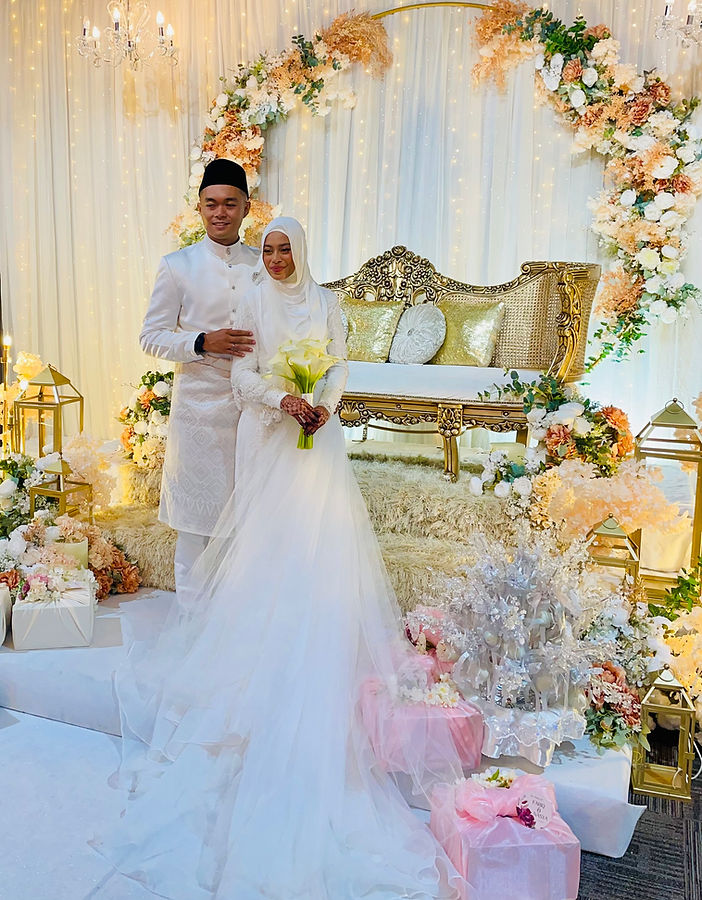
A bertunang is the formal Malay/Muslim engagement ceremony. The groom's family visits the agreed venue with hantaran trays, exchanges gifts, and places the engagement ring on the bride's finger. It marks a social and cultural commitment between two families — not a legal one. The legally binding marriage occurs only at the Akad Nikah, registered with the Registry of Muslim Marriages (ROMM).
Bertunang vs. Merisik — What Is the Difference?
The merisik and bertunang are two distinct ceremonies in Malay adat. Most couples confuse them because modern Singapore practice often combines both into a single event.
The merisik is an informal inquiry visit. The groom's family elders visit the bride's home to signal interest and assess family compatibility. No formal gifts change hands — the family expresses intent only. Nothing is formalised at this stage.
The bertunang follows the merisik. It is the formal engagement ceremony where both families exchange hantaran trays and place the engagement ring on the bride's finger. Many Singapore couples skip the separate merisik and proceed directly to bertunang after agreeing privately between themselves.
Trade-off: Combining both stages simplifies logistics and reduces the number of event days. However, families with strong adat traditions may expect the merisik to remain a separate, more private affair — confirm this with both families before merging the two ceremonies into one.
Is Bertunang Compulsory Before a Muslim Wedding in Singapore?
No — bertunang is not compulsory under Islamic law or Singapore civil law. The Administration of Muslim Law Act (AMLA) does not require an engagement ceremony before registration with ROMM. Muslim couples in Singapore can proceed directly to Akad Nikah without a bertunang.
However, the bertunang carries significant cultural weight among Singapore Malay families. Skipping it may create friction with extended family — particularly older members who regard the ceremony as a mark of respect between both families.
A bertunang does not create a legally binding contract under AMLA. The legal marriage process begins only at the Akad Nikah stage. Read the full guide on Akad Nikah requirements and the registration process in Singapore to understand what both ceremonies require separately.
The 8 Steps of a Malay Bertunang Ceremony in Singapore
A Malay bertunang follows a structured sequence — from the initial family discussion through to the formal exchange of gifts and ring placement. Most Singapore ceremonies run 2–4 hours. Understanding all eight steps helps both families communicate clearly and helps couples plan the venue layout and day timeline with confidence.
Steps 1–3: Pre-Ceremony — Merisik, Date Setting, and Family Agreement
The three pre-ceremony steps establish all terms before the formal visit. Both families must agree on every element in advance — no decision should be left to the day itself.
Step 1 — Merisik (Informal Inquiry): The groom's family elders visit the bride's home to express interest. In modern Singapore practice, the couple often agrees privately first, then the families arrange the merisik to formalise that intent.
Step 2 — Setting the Date and Terms: Both families negotiate the bertunang date, the number of dulang hantaran each side brings, and the wang belanja — the groom's financial contribution toward the wedding. In Malay adat, the odd/even tray count is agreed at this stage — not on the day of the ceremony. Both families must leave this negotiation with no open questions.
Step 3 — Hantaran Preparation: Both sides prepare their dulang hantaran trays. The groom's side traditionally brings an odd number (5, 7, or 9). The bride's side reciprocates with one tray more. Each tray requires professional gubahan (decorative arrangement). Budget for decoration and gift costs as two separate line items — couples who combine them consistently underestimate total spend.
Steps 4–6: The Ceremony — Rombongan Arrival, Hantaran Exchange, Ring Placement
The core ceremony takes place at the bride's location or a dedicated venue. This is the section every guest attends. Venue logistics — parking, prayer space, private waiting area — matter significantly at this stage.
Step 4 — Rombongan Arrival: The groom's delegation arrives at the venue. Family elders may exchange pantun (traditional Malay poetry) at the entrance. The groom may or may not attend depending on family preference — confirm this detail well in advance, not on the morning of the event.
Step 5 — Presentation of Hantaran: The groom's side presents their dulang trays first. Each tray displays beautifully arranged gifts — clothing sets, prayer items (telekung, sejadah, Al-Quran), fruit, traditional kuih, perfume, and increasingly modern lifestyle items such as designer accessories or electronics. The bride's family then presents their reciprocal trays. Bunga rampai — shredded pandan leaves mixed with jasmine and rose petals — appears on nearly every tray as a symbol of everlasting sweetness in Malay adat tradition.
Step 6 — Ring Placement: A female elder from the groom's side places the engagement ring on the bride's finger. Following Malay adat bertunang tradition, the bride waits in a private room until this moment. A venue with a dedicated bridal suite handles this protocol naturally — without one, the logistics require improvisation on the day.
Steps 7–8: Doa, Refreshments, and Closing the Ceremony
The final two steps close the ceremony formally and open the conversation about wedding planning between both families.
Step 7 — Doa (Supplication): An elder or invited ustaz recites a doa blessing the engagement. This marks the spiritual acknowledgement of the commitment between both families. Most ceremonies hold the doa immediately after ring placement, before families move to the dining area.
Step 8 — Refreshments and Family Discussion: Both families share a halal meal. Families commonly discuss the nikah date, venue, and key wedding logistics at this stage. Some Singapore couples choose to combine the bertunang and solemnisation on the same day to reduce total event costs — read the detailed guide on holding a solemnisation at an external venue in Singapore for the specific logistics involved.
How Much Does a Bertunang Ceremony Cost in Singapore (2026)?
A mid-budget bertunang in Singapore runs S$10,000–S$20,000 all-in, covering venue hire, MUIS-certified halal catering, and hantaran for both sides. Venue and catering costs carry verified pricing from De Hall's published 2026 rates. Hantaran figures below are planning estimates — no official Singapore government source publishes bertunang-specific cost data.
Venue and Halal Catering Cost — De Hall 2026 Verified Rates
Venue and catering represent the largest single controllable expense in any bertunang. Booking early — 9–14 months ahead for peak dates — directly affects availability and what you pay.
De Hall's Engagement Package (Package 03) starts from S$50 per pax for MUIS-compliant halal catering, with all-in event totals structured by guest count tier — from S$8,000 for a Micro Wedding (15–50 pax) up to S$34,500 for a Small Wedding (50–100 pax), and from S$50 per pax for larger engagements of 100 guests and above, according to the venue's published 2026 Malay wedding and engagement package rates. The venue at 3 Irving Road, #02-08, Tai Seng Centre, Singapore 369522, spans 14,000 sq ft across two flexible ballrooms — scalable from 50 to 1,000 guests, with natural daylight throughout both spaces.
Every De Hall package includes MUIS-certified halal catering, a dedicated musollah with ablution facilities for prayer, a private bridal suite, basic pelamin and stage setup, sound system with microphones, and a dedicated event coordinator experienced with adat bertunang protocol. These elements cover the logistics gaps that create stress on ceremony day. All published rates are nett — no service charge or GST stack on top.
Trade-off: Home ceremonies eliminate venue hire costs entirely but cap capacity at 30–50 seated guests in most Singapore HDB flats. For 80 or more guests, a dedicated venue is the practical choice — dedicated parking, air-conditioning, on-site kitchen access, a prayer room, and a private bridal waiting area become unmanageable to arrange at home beyond that threshold.
De Hall 2026 Engagement Package Tiers
Package Tier | Guest Count | All-In Total / Rate | Best For |
Micro Engagement | 15–50 pax | S$8,000 – S$25,000 all-in | Intimate bertunang with very close family |
Small Engagement | 50–100 pax | S$19,000 – S$34,500 all-in | Standard bertunang with extended family |
Large Engagement | 100–1,000 pax | From S$50 per pax | Grand-scale bertunang or combined bertunang + solemnisation |
All pricing sourced from De Hall's published 2026 package rates. Rates are nett (no "++" charges). Confirmed during free consultation at the Tai Seng Centre showroom.
Hantaran Budget — Planning Estimates for Both Sides
Hantaran represents a significant variable cost in every bertunang — and it falls on both families simultaneously. No Singapore government source publishes verified bertunang hantaran data. The estimates below serve as a starting point for your family discussion only.
Each side typically allocates S$1,000–S$3,000 for gifts and tray decoration combined. The groom's side traditionally sends 7 trays — at S$150–S$250 each in decoration alone, that reaches S$1,050–S$1,750 before purchasing the gifts themselves. The total hantaran commitment adds up faster than most couples plan for. Budget for three separate line items: gift items per tray, gubahan decoration per tray, and supplementary items such as bunga rampai and sirih.
De Hall's event coordinator can provide current vendor referrals for gubahan upon request — raise this during your consultation at the booking enquiry page.
Total Budget Scenarios — Low, Mid, and High
Venue and catering figures use De Hall's verified 2026 published rates. Hantaran and decoration figures are community-based planning estimates — verify directly before committing to final numbers.
Budget Level | Venue + Catering (De Hall) | Hantaran (Both Sides, Est.) | Decoration (Est.) | Total Estimate |
Low (home/very intimate, <15 pax) | S$0–S$3,000 | S$1,500 | S$500 | ~S$3,000–S$8,000 |
Mid (Micro tier, 15–50 pax) | From S$8,000 all-in | S$3,000 | S$2,000 | ~S$10,000–S$20,000 |
High (Small–Large tier, 50–200 pax) | From S$19,000 all-in / S$50+ per pax | S$4,000+ | S$3,000+ | ~S$25,000–S$40,000 |
Venue and catering rates sourced from De Hall's published 2026 engagement package. Hantaran and decoration figures are planning estimates only — verify before committing.
Halal Catering at a Bertunang — What MUIS Certification Actually Requires
Not every caterer who calls themselves "halal" holds a valid MUIS certificate. Singapore operates three distinct tiers of halal compliance — and the differences matter at a bertunang. Choosing an uncertified caterer creates legitimate doubt for observant guests and undermines months of careful preparation.
"Halal-Friendly" vs. MUIS-Certified — These Are Not the Same
MUIS certification requires a caterer to meet three documented standards, published by MUIS on their official Halal scheme eligibility page.
First: all raw materials must carry halal documentation — not just the finished dish. This covers meat sourcing, sauces, flavourings, and cooking oils throughout the supply chain. Second: the caterer must employ a minimum of two Muslim staff, including at least one who has completed the MUIS Halal Training Programme. Third: the business must operate under the Singapore MUIS Halal Quality Management System (HalMQ) — a traceable, documented compliance framework verified by MUIS auditors.
A caterer labelled "Muslim-owned" or "halal-friendly" meets none of these formal MUIS requirements. Before signing any catering contract, ask for the certificate number and expiry date. Verify it directly at the MUIS Halal directory at muis.gov.sg/halal. An expired certificate is not a valid certificate.
De Hall operates with MUIS-compliant halal catering at its Tai Seng Centre venue. Certification details are available upon request during the consultation — see all event options at the De Hall services and engagement packages page.
Five Questions to Ask Any Caterer Before You Book
Is your current MUIS certificate valid? Ask for the certificate number and expiry date. Verify directly at muis.gov.sg/halal — the directory is publicly accessible and takes under two minutes to check.
Do you operate a dedicated halal kitchen? Shared kitchens with non-halal operations create cross-contamination risk that MUIS certification alone does not eliminate at the preparation stage.
How many Muslim staff will handle my event? MUIS requires a minimum of two Muslim staff throughout preparation and service — not just at the delivery point.
Can you provide halal documentation for all raw ingredients? This covers meat sourcing, sauces, and flavourings — not just menu item names presented to guests.
Does the venue include a musollah or prayer room? A bertunang running 2–4 hours will include prayer time for observant guests. Confirm before finalising the venue, not after the contract is signed.
Hantaran Dulang — Items, Tray Count, and What Islam Actually Says
Hantaran is the traditional gift exchange at the heart of every bertunang. Both sides prepare beautifully decorated dulang trays. The groom's side sends an odd number; the bride's family returns one tray more. However, hantaran carries no Islamic obligation — a distinction most Singapore wedding planning guides miss entirely, and one that prevents unnecessary financial pressure on both families.
Traditional and Modern Hantaran Items for a Bertunang (2026)
Traditional hantaran items carry cultural significance and remain standard across Singapore Malay bertunang ceremonies today.
The tepak sirih (betel leaf container) or sirih junjung holds ceremonial importance as a symbol of respect in Malay adat. Bunga rampai — shredded pandan leaves mixed with jasmine and rose petals in rose water — symbolises everlasting sweetness and appears on nearly every tray as a mark of cultural identity. Standard traditional items include a baju kurung or kebaya clothing set, a fruit basket, traditional kuih, and prayer items such as a telekung, sejadah, or Al-Quran set.
Modern Singapore couples increasingly include designer handbags, couple watches, fragrances, shoes, and electronics alongside traditional items. This shift reflects how Singapore Malay couples approach the bertunang — as both a cultural ceremony and a personal milestone worth celebrating with meaningful, practical gifts.
Trade-off: High-value modern items raise expectations and total spend for both sides simultaneously. Set a per-side spending cap privately before both families begin purchasing. Discovering a significant mismatch in tray values on the day creates awkwardness that pre-ceremony communication prevents entirely.
How Many Trays — and What Islamic Law Actually Says About Hantaran
The traditional cultural rule: the groom's side brings an odd number of trays (5, 7, or 9), and the bride's family reciprocates with one tray more (6, 8, or 10). This odd/even structure comes from Malay adat — a cultural practice, not an Islamic religious requirement. Either family can propose a different tray count if both sides agree during pre-ceremony negotiations.
More critically: hantaran itself carries no Islamic obligation. The Muslim Family Help (MHF) states explicitly — "If the groom is not agreeable in giving hantaran, he should not be forced into doing so." Hantaran is a voluntary cultural gift exchange, entirely separate from the mas kahwin.
Many couples confuse hantaran with mas kahwin. The mas kahwin (mahr) is the mandatory dowry — a compulsory payment from the groom to the bride, formally registered at ROMM during the Akad Nikah under AMLA. Hantaran is voluntary. Only the mas kahwin carries Islamic and legal weight. Read the full breakdown in the Malay wedding 2026 timeline and checklist.
Choosing the Right Venue for Your Bertunang in Singapore
Venue selection comes down to three non-negotiables: guest count, halal certification, and prayer facilities. For more than 80 guests, a dedicated event space is the practical choice. Most Singapore HDB flats seat 30–50 guests comfortably — beyond that threshold, the absence of an on-site kitchen, dedicated parking, a quiet prayer space, and a private bridal waiting area creates compounding problems that a home ceremony cannot resolve on the day.
Five Things Every Bertunang Venue Must Provide
Current MUIS halal certification — for the caterer and all food prepared on-site. Verify at muis.gov.sg/halal using the certificate number, not the venue's verbal assurance.
Dedicated musollah or prayer room — not a converted storeroom with a temporary partition. A 2–4 hour bertunang with 80–200 observant guests requires proper, accessible facilities throughout the event.
Private bridal suite or waiting room — the bride waits separately from guests until ring placement in Step 6. A venue without this forces improvisation that disrupts the ceremony flow and the bride's composure.
Flexible layout supporting rombongan arrival — the procession requires clear entrance space. Fixed theatre-style or tightly packed banquet seating does not accommodate the movement a bertunang rombongan requires.
Event coordinator with adat bertunang experience — protocol knowledge prevents logistical errors. An inexperienced coordinator creates delays that cascade through every subsequent ceremony step.
Why De Hall Is Built Specifically for Bertunang Events
De Hall at 3 Irving Road, Tai Seng Centre #02-08, Singapore 369522, addresses all five requirements within a single engagement package. The venue provides 14,000 sq ft across two flexible ballrooms with natural daylight. Both spaces reconfigure for rombongan arrival, hantaran exchange, dining, and doa — without requiring separate room moves between ceremony sections.
The De Hall 2026 Engagement Package includes MUIS-compliant halal catering from S$50 per pax (nett, no "++" charges), a dedicated musollah with ablution facilities, a private bridal suite, basic pelamin and stage, sound system, and a dedicated coordinator experienced with Malay engagement ceremonies. All-in packages start from S$8,000 for intimate events of 15–50 guests. Saturday evening peak slots fill 9–14 months in advance. Weekday daytime and Sunday slots carry better availability for couples with flexible scheduling preferences.
For couples planning the solemnisation alongside the bertunang on the same day, De Hall's Full Wedding Package accommodates combined-ceremony days with the same coordinator handling both events. Read the full 2026 package breakdown — or book a free consultation at dehallsg.com/book-online to receive a customised quote in a single visit.
When to Hold Your Bertunang — Seasons, Dates, and Booking Lead Times
Timing a bertunang correctly requires navigating three layers: Islamic calendar avoidances, Singapore Malay wedding peak seasons, and venue availability windows. Missing any one of these creates last-minute pressure that affects both families and every guest who has cleared their schedule.
Ramadan, Post-Eid Peak Season, and How Far Ahead to Book
Singapore Malay families widely avoid celebrations during Ramadan. Ramadan 2026 officially began on 18 February 2026, as announced by the Mufti of Singapore. Most couples schedule bertunang ceremonies before mid-February or well after Hari Raya Aidilfitri — aligning with family availability and the celebratory spirit appropriate for an engagement.
The post-Eid peak runs April through May. August through November delivers a second strong booking window. June and December — Singapore school holiday months — attract high demand across all event categories, as out-of-town family members are most likely to be available for travel. Based on De Hall's published booking guidance in the 2026 Malay wedding package, Saturday evening peak-season slots fill 9–14 months in advance. Weekday daytime and early Sunday slots remain more accessible for couples with schedule flexibility.
Some families observe avoidances during Muharram (the Islamic New Year month). This is a community custom — not a religious obligation under Islamic law. Its observance varies significantly by family background. Confirm the preference with both families before selecting any Muharram date and treating it as fixed in your planning calendar.
Practical rule: confirm venue availability before locking in the date with both families. Adjusting a date before family communication costs nothing. Changing a communicated date after both families have booked leave and travel costs significantly more — in logistics, money, and goodwill.
FAQ: Bertunang Ceremony Singapore — Questions Answered
Do you need to register a Bertunang with ROMM in Singapore?
No. The Registry of Muslim Marriages (ROMM) handles Akad Nikah registration — not the bertunang. A bertunang is a cultural and social commitment between two families. It carries no legal status under the Administration of Muslim Law Act (AMLA). The legal marriage process in Singapore begins only at the Akad Nikah, when the kadi officiates and the registration is submitted to ROMM.
Can you combine a Bertunang and Akad Nikah on the same day?
Yes. Many Singapore Muslim couples hold both ceremonies on the same day to reduce venue costs and simplify logistics for guests. The bertunang typically happens in the morning, with the Akad Nikah in the afternoon. This requires advance coordination with the kadi through ROMM. De Hall's Full Wedding Package handles both in one continuous flow — read the full 2026 package breakdown for what a combined format requires from both families and the venue.
How many dulang should the groom's side bring to a Bertunang?
The traditional guideline in Malay adat: the groom's side brings an odd number of trays (5, 7, or 9). The bride's family reciprocates with one tray more (6, 8, or 10). Both families agree on the exact tray count during pre-ceremony negotiations — not on the ceremony day. This is a cultural convention, not an Islamic religious requirement. Either family can propose a different arrangement by mutual agreement.
Is hantaran compulsory under Islamic law?
No. The Muslim Family Help (MHF) states explicitly that hantaran is not obligatory in Islam. The compulsory element is the mas kahwin (mahr/dowry) — a mandatory payment from the groom to the bride, registered at ROMM during the Akad Nikah under AMLA. Hantaran is a separate, voluntary cultural gift exchange. Neither party should face pressure to provide hantaran beyond what both families genuinely agree on.
Can a Bertunang be held at a function hall instead of at home?
Yes — and for guest lists above 60–80 people, a dedicated function hall is the more practical choice. Most Singapore HDB flats seat 30–50 guests comfortably. A dedicated venue provides MUIS-certified halal catering, a musollah, a private bridal suite, and parking — elements that become logistically unmanageable at home for larger gatherings. De Hall offers a dedicated Engagement Package (Package 03) for merisik and bertunang events at Tai Seng Centre, Singapore 369522, starting from S$50 per pax (nett), with all-in totals from S$8,000 for intimate events of 15–50 guests.
What is the difference between hantaran and mas kahwin?
Mas kahwin (mahr) is the mandatory dowry — a compulsory payment from the groom to the bride at the Akad Nikah, registered with ROMM under AMLA. It carries Islamic and legal weight. Hantaran is a voluntary cultural gift exchange at the bertunang, where both families present decorated trays. Only the mas kahwin is legally and religiously obligatory. Read the complete comparison in the Malay wedding 2026 timeline and checklist.
How far in advance should I book a venue for my Bertunang?
Book 9–14 months in advance for Saturday evening peak slots (April–May and August–November). Weekday daytime and Sunday morning slots can often be secured 3–6 months ahead. De Hall's showroom is open Tuesday–Friday 1pm–6pm and Saturday by appointment — book a free consultation at dehallsg.com/book-online to confirm date availability before communicating the date to both families.
Plan Your Bertunang at De Hall — Book a Free Consultation
De Hall handles full engagement and Malay wedding packages at Tai Seng Centre, 3 Irving Road #02-08, Singapore 369522. The venue provides two ballrooms totalling 14,000 sq ft, MUIS-compliant halal catering from S$50 per pax (nett), a musollah with ablution facilities, a private bridal suite, and a coordinator experienced with adat bertunang. Engagement packages start from S$8,000 all-in for intimate events of 15–50 guests. Peak Saturday evening slots in April–May and August–November fill 9–14 months ahead. Book a free consultation online or visit the showroom Tuesday–Friday 1pm–6pm to confirm your date and receive a customised quote in a single visit.




Comments