


Malam Berinai Singapore: Meaning, Ritual & Planning Guide


Malam berinai is the quiet, emotional night before the wedding noise begins. Yet many couples treat it as an afterthought, then rush it days before the akad nikah. This guide explains what the henna night means, its traditional stages, and what happens on the night. It also shows how berinai fits your wedding sequence, and how to plan one calmly. De Hall hosts full Malay weddings in Tai Seng, so the timing advice reflects a real ceremony flow.
Key Takeaway: Malam berinai, or henna night, is a Malay pre-wedding tradition held a few nights before the akad nikah. Family members apply henna to the couple's hands as a blessing. It is cultural adat, not an Islamic obligation. Plan the artist and small dais several weeks ahead, and schedule it close to the wedding date.
Malam berinai, also called henna night, is a Malay pre-wedding ceremony where family members apply henna to the bride and groom's hands as a blessing, usually a few nights before the wedding. — De Hall Wedding Guide, 2026
Henna, or inai, is a natural reddish dye made from the dried, powdered leaves of the Lawsonia inermis plant, which stains the skin for roughly one to three weeks. — De Hall Wedding Guide, 2026
What Is Malam Berinai?
Malam berinai is the Malay henna night held shortly before the wedding. Family members apply henna, or inai, to the couple's hands and sometimes feet. The night blesses the couple and gathers close family before the big day. It is a warm, intimate gathering, not a large reception.
The Meaning Behind the Henna
The henna carries symbolism beyond decoration. Applying inai marks the couple's transition into married life. It also draws close family together in blessing, days before the celebration. The custom traditionally takes place a few days before the solemnisation, to foster closer family ties. Therefore berinai feels personal and reflective, unlike the public reception that follows.
Is Berinai a Religious Requirement?
Berinai is cultural adat, not an Islamic obligation. Only the akad nikah carries a direct religious duty in a Malay-Muslim wedding. Bersanding, the hantaran exchange, and berinai are all customs rooted in Malay tradition. For the one ceremony that is religiously binding, read our guide to the akad nikah requirements. As a result, couples may scale berinai up, down, or skip it entirely.
Berinai Kecil and Berinai Besar: The Traditional Stages
Traditional berinai unfolds across more than one night. Berinai Kecil is the smaller, private henna session with immediate family. Berinai Besar is the larger gathering closer to the wedding. Many modern Singapore couples now combine these into a single evening.
How the Stages Differ
The two stages differ in scale and intimacy. The table below sets them side by side, so you can decide what suits your family.
Aspect | Berinai Kecil | Berinai Besar |
Scale | Small, private | Larger gathering |
Guests | Immediate family only | Extended family and close friends |
Timing | A few nights before | Closer to the wedding |
Mood | Quiet, reflective | Festive, celebratory |
Notably, smaller weddings often hold one combined night. Therefore choose the format that matches your guest list and energy.
What Happens on the Night?
The couple sits on a small decorated dais while elders apply henna. Family members take turns, often starting with parents and grandparents. Each touch carries a blessing and a wish for the marriage. The mood stays gentle, with prayers, photos, and quiet conversation.
The Order of Blessings
The blessing usually follows a clear order. First, the most senior elders apply a dot of henna to the couple's palms. Next, parents and close relatives follow in turn. Finally, the henna artist completes the detailed design. A henna artist or your mak andam often handles the intricate work. Therefore agree the order with your family before the night begins.
Setting and Decor
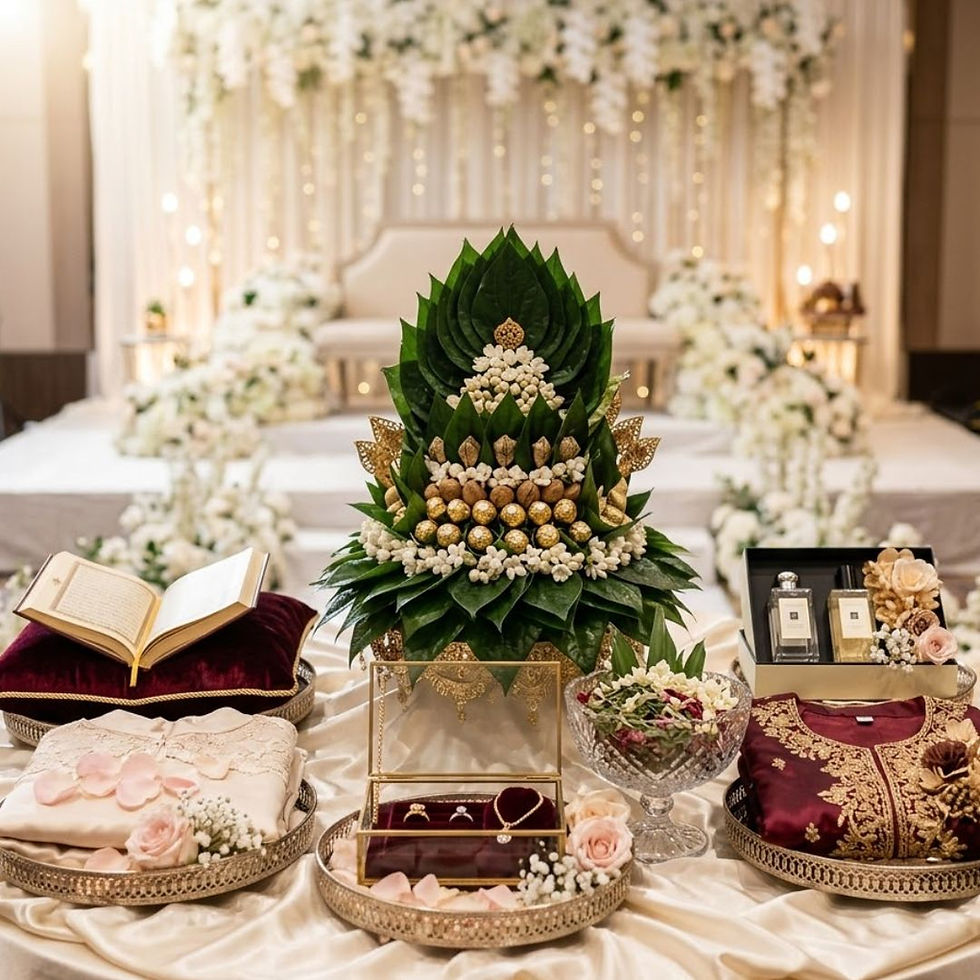
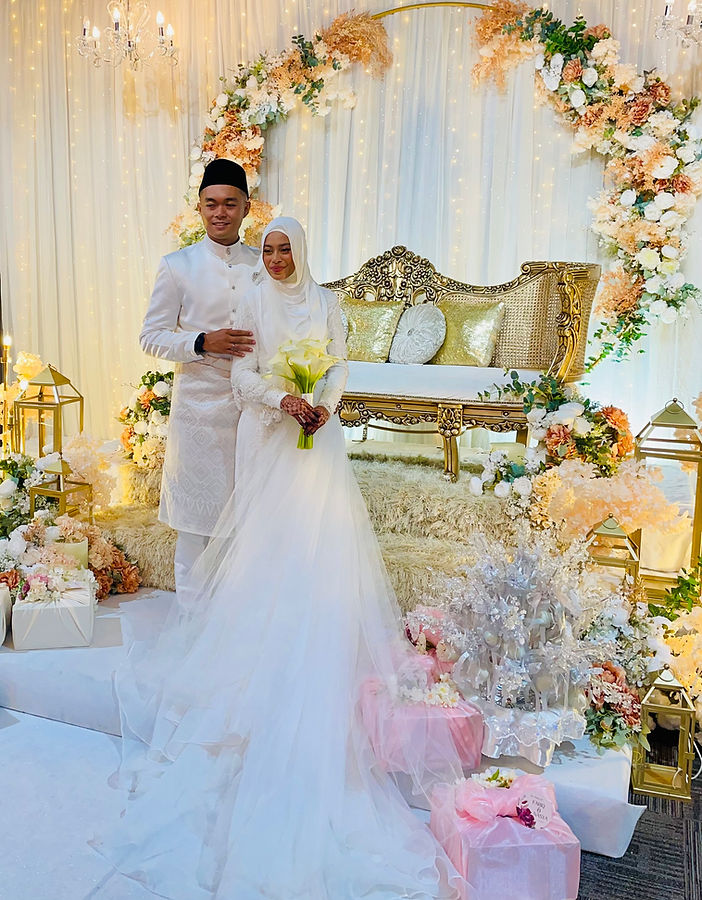
Berinai needs only a small, warm setting, not a grand hall. A modest dais, soft lighting, and fresh flowers set the tone. Many families hold it at home, while others book an intimate venue. The decor often echoes the wedding's colour story for a consistent look. As a result, the henna night photographs beautifully without heavy spending.
Where Does Berinai Fit in the Wedding Sequence?
Berinai sits in the final days before the akad nikah. It usually follows the hantaran exchange and precedes the solemnisation. Couples schedule it close enough that the henna stays rich for the wedding photos. Henna stains last roughly one to three weeks, so timing matters.
Timing It with Henna in Mind
Plan berinai two to four nights before the wedding for the best colour. Henna deepens over the first day, then holds for one to three weeks. Too early, and the stain fades before the reception. Too late, and the design has no time to darken. Therefore book your henna artist once your wedding date is fixed.
How to Plan a Malam Berinai
A calm berinai needs only a few decisions made early. Settle the scale, the artist, the setting, and the timing. Booking ahead prevents a last-minute scramble in the final week. Keep it intimate, since that is the point of the night.
A Simple Planning Checklist
Decide the scale: an intimate Berinai Kecil, or a larger Berinai Besar.
Book your henna artist or mak andam several weeks ahead.
Set up a small dais, soft lighting, and your colour-themed decor.
Schedule the night two to four nights before the akad nikah.
Brief your family on the order of blessings beforehand.
Keep the guest list tight, so the night stays personal. Unsure how berinai fits your wider plan? See how De Hall plans the full wedding.
Modern Berinai in Singapore
Modern Singapore couples often simplify berinai without losing its meaning. Many combine Berinai Kecil and Berinai Besar into one evening. Some hold it at home, while others prefer a styled venue setting. A small, well-lit space keeps the focus on family and blessings. To discuss how an intimate pre-wedding gathering can be arranged alongside your main reception, contact the De Hall team directly.
Coordinating Berinai with Your Venue and Wedding
Berinai works best when it shares your wedding's colour story. Align the dais, flowers, and lighting with your pelamin and attire. A single coordinator keeps the henna night, the akad, and the reception consistent. Plan them together, not as separate events.
One Look Across Every Ceremony
Your berinai, akad nikah, and bersanding should feel like one story. Match the henna-night decor to your bersanding pelamin and overall theme. De Hall offers a Full Wedding Package as a one-stop solution for your big day. Book a planning session early to lock the look. Reserve a free De Hall consultation to map every ceremony in one sitting.
FAQ: Malam Berinai in Singapore
What is malam berinai?
Malam berinai, or henna night, is a Malay pre-wedding ceremony held a few nights before the akad nikah. Family members apply henna to the couple's hands as a blessing, gathering close relatives before the wedding. It is an intimate, reflective gathering, not a large public reception.
Is berinai a religious requirement?
No. Berinai is cultural adat, not an Islamic obligation. Only the akad nikah carries a direct religious duty in a Malay-Muslim wedding. Bersanding, the hantaran exchange, and berinai are all Malay customs. Couples may therefore scale berinai up, down, or skip it entirely.
What is the difference between Berinai Kecil and Berinai Besar?
Berinai Kecil is the smaller, private henna session with immediate family, held a few nights before the wedding. Berinai Besar is the larger gathering with extended family and close friends, closer to the day. Many modern Singapore couples combine the two into one evening.
When should the henna night be held?
Hold the henna night two to four nights before the akad nikah. Henna deepens over the first day, then holds for roughly one to three weeks. Schedule it too early and the stain fades before the reception. Schedule it too late and the design has no time to darken.
Who applies the henna?
Family elders apply the first dots of henna as a blessing, usually starting with parents and grandparents. A henna artist or mak andam then completes the detailed design. Agree the order of blessings with your family before the night, so it flows smoothly.
Plan Your Malay Wedding at De Hall
A calm berinai sets the tone for the whole celebration. De Hall is a one-stop trusted wedding planner in Singapore, with all services for your big day under one roof. The venue is alcohol-free and air-conditioned, located at Tai Seng. Book a free consultation online to plan every ceremony in one place. You can also send an enquiry via the contact page to speak directly with the De Hall team.



Comments